L'iroko
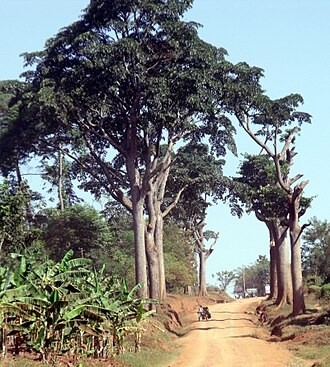
The iroko tree is one of the giants of the rainforest, reaching 40 to 45 meters in height and approximately 150 centimeters in diameter. Native to West and Central Africa (Nigeria, Ghana, Cameroon, and the Democratic Republic of Congo), it is distinguished by its straight, massive trunk, often covered in gray-brown bark that develops fissures with age. Its glossy, dark green leaves form a dense canopy that provides ample shade. Its taproot system allows it to withstand strong winds.
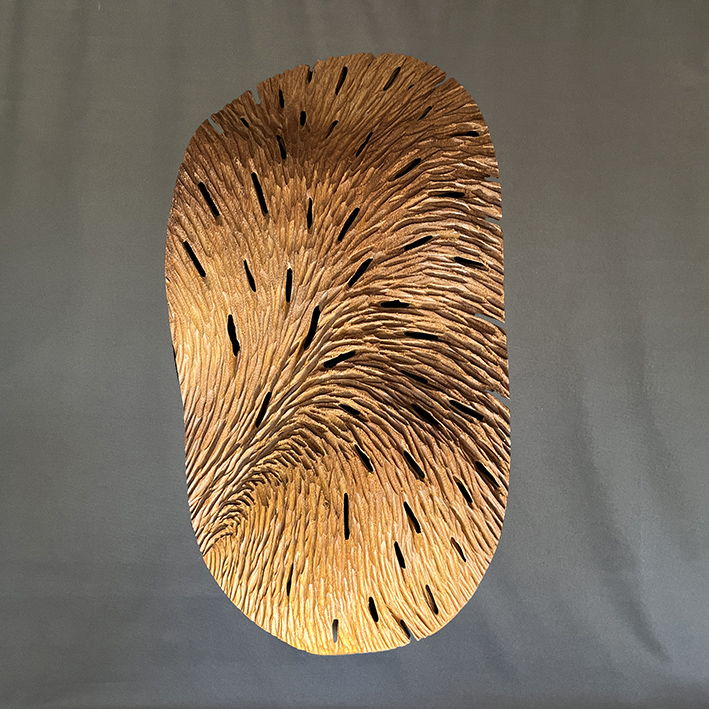
Iroko wood is very strong and durable, often compared to teak for its strength and resistance to moisture and insects. It has long been used for building houses, furniture, boats, as well as for sculptures and handicrafts. Its color ranges from golden yellow to dark brown, and over time, it develops a warm, deep patina.

Did you know?
The tropical iroko tree has the unique characteristic of being an oxalogenic tree: it transforms CO2 absorbed from the air into limestone, thus offering the dual advantage of sequestering carbon and enriching the soil. Limestone remains in the soil in solid form for thousands, even hundreds of thousands, of years; oxalogenic trees therefore offer a potential long-term solution. It is estimated that an iroko tree can store approximately 21 kg of carbon per year.
Symbolism:
The iroko is also a symbolic tree in some African cultures, considered protective and often associated with longevity and strength. In Benin, the cultural area of Voodoo, the iroko is a revered and revered fetish tree. Sacralization is therefore the fundamental means by which local populations preserve the tree. This wood was a real discovery for me; its intense, chocolate-colored hue is a feast for the eyes. It warms the atmosphere of a room and leaves its mark on the space. It inspires me and allows me to work on large volumes. Indeed, since the trunks are very wide, one can work on large sculptures in a single piece.
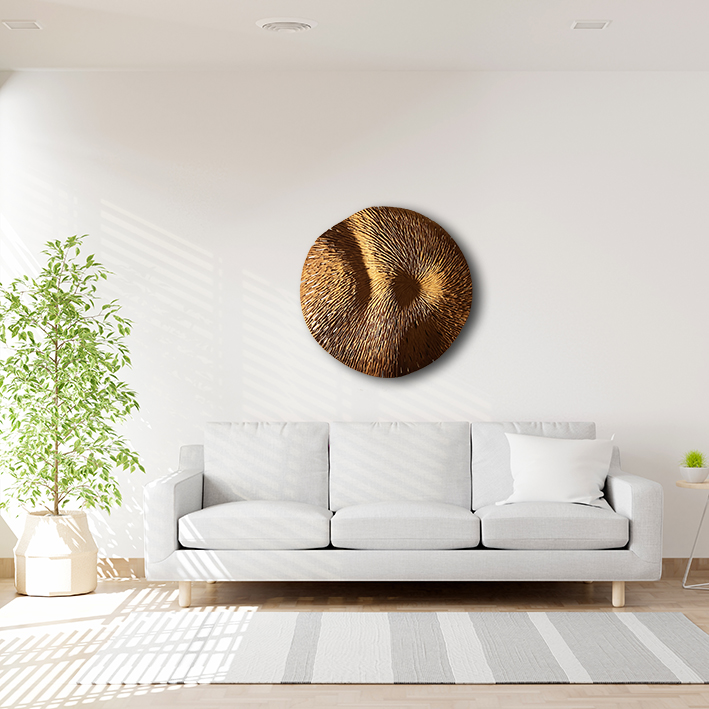
This wood was a real discovery for me; its intense, chocolate color is a feast for the eyes. It warms the atmosphere of a room and leaves its mark on the space. It inspires me and allows me to work on large scale. Indeed, since the trunks are very wide, one can create large sculptures from a single piece.